Fiat Casino vs Crypto Casino: How the Two Types Actually Differ
Published 2026-09-09 · Updated 2026-09-09 · By the PlayersReports Editorial Team
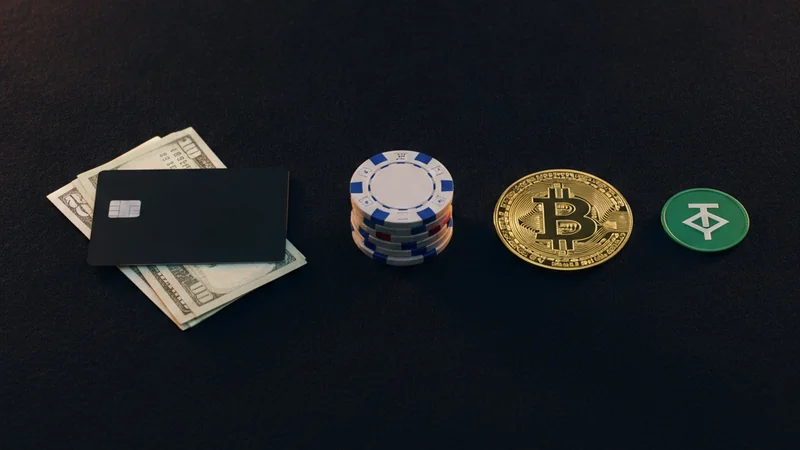
Ask ten players what a “crypto casino” is and you will get ten answers, most of them wrong in some small way. Ask what a “fiat casino” is and you will mostly get blank looks, because almost nobody uses the phrase until they meet its opposite. This guide sets both terms out plainly: what each type of casino is, how the money actually moves at each, where the real differences sit (payments, verification, licensing, bonuses, price risk) and where the marketing differences are just noise. It also names concrete examples of each type, including the hybrid brands that make up most of the Asia-facing market, so the categories stop being abstract. What it does not do is tell you that one type is “better”. The games carry the same house edge whichever currency funds them, and the law that applies to you is the law of where you sit, not the coin in your wallet.
What a Fiat Casino Is
Fiat money is currency issued by a government and backed by that government rather than by a physical commodity: dollars, euros, pounds, ringgit, baht, Singapore dollars. A fiat casino is simply an online casino whose accounts are denominated in one of those currencies and whose cashier runs on the ordinary financial system.
In practice that means a familiar list of rails. Debit cards from Visa and Mastercard. Bank transfers, increasingly instant ones through open banking or national real-time systems such as FPX and DuitNow in Malaysia or PayNow in Singapore. E-wallets like Skrill, Neteller, Touch ‘n Go and GrabPay. Prepaid vouchers such as Paysafecard for players who want a hard spending cap. In some regulated markets, PayPal and Apple Pay. Every one of those rails has a company in the middle that can see the transaction, approve it, decline it or, for cards, reverse it after the fact.
That middle layer is the defining feature of a fiat casino, and it cuts both ways. On the cost side, a bank or card issuer can block gambling payments outright. Many do, and the United Kingdom went further in 2020 by banning credit-card gambling deposits entirely. Withdrawals wait on that same system: an e-wallet payout might land in hours, while a card refund or bank transfer more often takes one to five working days. On the benefit side, that middle layer is a witness and, in a dispute, sometimes a backstop. A card chargeback is a blunt tool and casinos fight them, but it exists, and a fiat casino operating under a serious licence has to answer to a regulator that can fine it or pull its licence if it mistreats players.
Fiat casinos also run full identity verification as a matter of law rather than choice. Anti-money-laundering rules in every serious licensing jurisdiction require the operator to know who its customer is, so expect to upload an ID document and proof of address before your first withdrawal, and often before your first deposit. Our casino KYC guide walks through exactly what gets asked for and why.
What a Crypto Casino Is
A crypto casino is an online casino you fund with cryptocurrency: Bitcoin, Ethereum, Litecoin and, more than any of those in practice, the dollar-pegged stablecoin Tether (USDT) on the Tron or Ethereum networks. You copy a deposit address from the cashier, send coins to it from your own wallet or exchange account, and once the network confirms the transaction the balance appears. Withdrawals reverse the process: you give the casino an address, it broadcasts a transaction, and the coins arrive when the chain confirms them, often within the hour.
Two things change when the bank disappears from the middle. The first is that nobody can decline the payment. A blockchain does not know or care that the receiving address belongs to a casino, so the bank-block problem that frustrates fiat players simply does not arise. The second is that nobody can reverse it either. A confirmed crypto transaction is final. There is no chargeback, no issuer to call, and if you paste the wrong address the coins are gone.
Crypto-native casinos, the ones built around crypto rather than adding it to a fiat cashier, tend to share a few more traits. Most hold your balance in the coin you deposited, or in a dollar-denominated ledger, rather than converting to a national currency. Many offer “provably fair” in-house games, where the outcome of each round is generated from a server seed the casino commits to in advance and a client seed you control, so you can check after the fact that the result was not manipulated. Verification is usually lighter at signup, though, as we cover below, rarely absent altogether. And licensing is thinner: the large majority of crypto-native operators hold a Curaçao licence, a smaller number hold Anjouan or Kahnawake permissions, and some hold nothing at all.
It is worth stressing that “crypto casino” describes the cashier and the culture, not the games. The slots at a crypto casino come from the same Pragmatic Play, Evolution and PG Soft catalogues as everywhere else, and they carry exactly the same return-to-player figures. The house edge does not shrink because you paid in Bitcoin. If you want the payment side in more depth, our guide on why crypto casino payments are popular covers the convert-at-the-door versus native-balance distinction in detail.
The Hybrid Model Most Asia-Facing Brands Actually Use
The clean fiat-versus-crypto split exists mostly in the regulated European market and among a handful of crypto-native brands. Across Southeast Asia, the typical large operator is a hybrid: one account, one balance in ringgit or dollars, and a cashier that lists local bank transfer, DuitNow, Touch ‘n Go, GrabPay and a crypto option side by side.
Of the ten casinos in our review set at the time of writing, nine list at least one crypto rail alongside their fiat methods. The only exception is 918Kiss, whose agent-run deposit model documents bank transfers and e-wallets but no crypto option we could verify. Our crypto casino comparison applies that exact test to every reviewed brand and ranks the qualifiers by overall score.
At most of these hybrids, crypto is a delivery method rather than a native balance. Your USDT arrives, the operator converts it to the account currency at the going rate, and from then on you are playing at a fiat casino with a faster front door. That matters for two reasons. It means the volatility risk described later in this guide only exists during the minutes your coins are in transit, not for the whole session. And it means the casino’s trust profile, licence and payout record are exactly what they would be if you had used a bank transfer, so the review you should read is the same one.
Fiat vs Crypto Side by Side
The table below compresses the practical differences. Every row is a typical case rather than a rule, and the hybrid brands above sit between the two columns on most of them.
| Factor | Fiat casino | Crypto casino |
|---|---|---|
| Account currency | USD, EUR, GBP, MYR, SGD, THB and similar | BTC, ETH, USDT or a dollar-denominated crypto ledger |
| Deposit rails | Cards, bank transfer, e-wallets, vouchers | Wallet-to-wallet transfer on a blockchain |
| Deposit speed | Instant for cards and e-wallets, minutes to hours for bank transfer | Minutes, set by network confirmation time |
| Withdrawal speed | Hours for e-wallets, one to five days for cards and banks | Often under an hour once approved by the operator |
| Reversibility | Cards can be charged back, transfers sometimes recalled | None, transactions are final once confirmed |
| Bank visibility | Gambling line visible on statements, may be blocked | Bank sees only a transfer to an exchange or wallet, if anything |
| KYC | Mandatory, usually before the first withdrawal | Lighter at signup, commonly triggered at withdrawal or by amount |
| Typical licence | UKGC, MGA, Gibraltar, Isle of Man, state regulators, or Curaçao for Asia-facing brands | Curaçao, Anjouan, Kahnawake, or none |
| Price risk on balance | None, one dollar stays one dollar | Real for BTC and ETH, minimal for USDT |
| Fees | Usually none from the casino, sometimes card or FX fees | Blockchain network fee on each transfer, varies with congestion |
| Provably fair games | Rare | Common for in-house originals, absent for third-party slots |
Deposits and Withdrawals: Where the Speed Gap Really Comes From
Crypto’s reputation for fast payouts is earned, but it is worth understanding why, because the reason also explains its limits.
A fiat withdrawal has three waiting stages. The casino reviews and approves the request, which can take anywhere from minutes to several days depending on the operator’s compliance workload. The casino’s payment processor then sends the money. Finally, the receiving bank or card network credits it, and card refunds in particular can sit in limbo for days because the networks were designed for merchant refunds, not payouts. Each stage involves a company that can pause the process.
A crypto withdrawal has the same first stage, the operator’s own approval, and that stage is where most of the real waiting happens at both types of casino. Once approved, though, the second and third stages collapse into a single broadcast on the blockchain, and confirmation typically takes minutes. That is why an operator with a slow compliance desk is slow regardless of currency, and why our fastest payout casinos comparison looks at the operator’s documented processing time, not just the rail.
The e-wallet rails common in Malaysia and Singapore narrow the gap considerably. A DuitNow or Touch ‘n Go withdrawal from a well-run hybrid such as BK8 commonly lands within the hour once the account is verified, which is comparable with a USDT transfer on the Tron network. The crypto advantage is largest against traditional bank transfers and cards, and smallest against modern instant-payment systems. Our e-wallet casino comparison covers those fiat rails specifically.
KYC: Lighter at Crypto Casinos, but Rarely Absent
The most persistent myth about crypto casinos is that they are anonymous. They are not, for two separate reasons.
The first is the blockchain itself. Every transaction is recorded publicly and permanently. A wallet address is a pseudonym, not a mask, and the exchange where you bought the coins almost certainly verified your identity and can link that address to you. Chain-analysis firms do this for a living, and regulators buy their services.
The second is the operator. Crypto casinos generally let you deposit and play with nothing more than an email address, which fiat casinos under a serious licence cannot do. But most of them reserve the right to demand ID, proof of address and proof of source of funds before releasing a withdrawal, and they exercise that right most often on large payouts, on accounts flagged for bonus abuse, and on any account where the deposit and withdrawal patterns look unusual. A player who assumed “no KYC” and then met a document request on a large cashout is one of the most common dispute patterns in this industry, and exactly the kind of case our complaints hub is built to track.
Fiat casinos are simpler to predict here: verification is coming, usually before your first withdrawal and often before you can deposit at all. It is slower to get started, but the rules are the same for everyone and they are written down.
Licensing and Trust: The Gap That Matters Most
If one difference between fiat and crypto casinos should shape your decision, it is this one, and it is less about the currency than about who the operators answer to.
Most fiat-first casinos in regulated markets hold licences from the UK Gambling Commission, the Malta Gaming Authority, Gibraltar, the Isle of Man or a state regulator in North America. Those bodies impose player-fund segregation, dispute-resolution schemes, advertising rules and real penalties, and they will hear a complaint against a licensee. The protection is imperfect, but it exists.
Crypto-native casinos overwhelmingly hold Curaçao licences, which are far cheaper to obtain and historically far lighter on enforcement, and a meaningful number hold licences from smaller jurisdictions or none at all. The Asia-facing hybrids on this site sit in the same Curaçao bracket, which is why our trust audit buckets every reviewed brand by what we could actually verify rather than by what its footer claims. For BK8, for example, we could confirm a Curaçao eGaming claim but not resolve a licence number against the registry, and we say so in the review rather than rounding it up to “licensed”.
Now combine that with the reversibility point. At a fiat casino you have two safety nets, the regulator and the payment network. At a crypto casino you often have neither: no chargeback, and a regulator that may not respond. That is the real trade. Crypto does not make a casino less trustworthy, but it removes every backstop except the operator’s own conduct, which is why the operator’s track record has to be checked harder, not softer, before you send anything. Our rating methodology weights trust above every other criterion for exactly this reason.
Bonuses and Wagering: The Same Maths in a Different Wrapper
Bonus structures at the two types of casino look different but obey the same rules. Fiat casinos in regulated markets tend to offer smaller matches with tighter terms, because regulators police misleading promotions. Crypto-native brands and Asia-facing hybrids advertise larger headline figures, a 288% match at BK8 or a “200% up to 1 BTC” style offer at a crypto brand, and the wagering requirement is what determines whether either is worth having.
Crypto casinos add two wrinkles. Bonuses are often denominated in a coin, so a bonus worth 0.01 BTC today may be worth more or less in dollars by the time you clear it. And crypto-native brands increasingly favour rakeback, reload and VIP-tier schemes over one-off welcome offers, which are easier to understand but reward volume, and volume is exactly what the house edge feeds on. Whichever wrapper the bonus comes in, run it through our wagering requirement calculator before you opt in.
Volatility, Fees and Irreversibility
Three costs are specific to the crypto side and deserve a plain statement each.
Volatility. A balance held in Bitcoin or Ethereum is a second bet layered on top of the one you meant to place. If you deposit 0.01 BTC and the coin drops 8% during the week you play, you have lost 8% before spinning a reel. Stablecoins such as USDT are designed to hold a dollar value and remove most of this risk, which is why USDT dominates crypto deposits at hybrid casinos. If you would not otherwise be speculating on a coin’s price this week, do not fund a bankroll in it.
Fees. Casinos rarely charge for crypto deposits, but the network does. Bitcoin and Ethereum fees rise sharply when the chains are busy, and a small withdrawal can lose a noticeable percentage to the fee. USDT on Tron is cheap most of the time. Fiat rails, by contrast, are usually free at the casino end, with occasional card or currency-conversion charges from your bank.
Irreversibility. This one cuts in both directions, so it deserves care. It protects the casino from chargeback fraud, which is partly why crypto operators can approve withdrawals faster. It also means a mistyped address, a wrong network selection or a deposit to a casino that then refuses to pay leaves you with no mechanism at all to recover the funds. Check the address twice, confirm the network matches, and send a small test amount before a large one.
The Law Doesn’t Care Which Currency You Use
Crypto marketing often implies that paying in Bitcoin puts you outside the reach of local gambling law. It does not. The law that applies is the law of where you are physically located when you place the bet, and it is written in terms of gambling, not in terms of currency.
Singapore is the clearest example. Playing at an offshore online casino is an offence for the individual player, and using USDT rather than a PayNow transfer changes nothing about that. Our Singapore casino guide sets out the position in full. The same principle holds in every market covered by our country guides: read the legal section for your own jurisdiction first, and treat the payment method as the last question rather than the first. Crypto can route around a bank’s gambling block. It cannot route around a statute.
Named Examples of Each Type
The categories become much clearer with real brands attached. None of the external brands below is reviewed on this site yet, so treat these as descriptions of what type of casino each is, not as recommendations.
Fiat-first casinos
The regulated European market is where pure fiat casinos live. bet365, licensed by the UK Gambling Commission among others, runs entirely on cards, bank transfers and e-wallets with no crypto cashier at all. 888casino, LeoVegas and Betway are in the same category: multi-licensed, fiat-only, and subject to regulators that will hear a complaint. Their withdrawals are slower than crypto and their bonuses smaller, and in exchange they carry the strongest player protection in the industry.
Closer to home, 918Kiss is the fiat-only example in our review set. Its agent-based model runs on bank transfers and e-wallets handled through individual agents, and we could not verify a crypto rail; the detail is in our 918Kiss review. Mega888 sits just across the line, as our Mega888 review documents: mostly fiat through agents, with USDT accepted by some agents but not documented as a standard option.
Crypto-native casinos
Stake is the brand most people picture when they hear “crypto casino”: launched in 2017, Curaçao-licensed, built around a crypto ledger, with provably fair in-house games and a sponsorship footprint that has spanned football, UFC and Formula 1. BC.Game, Roobet, Cloudbet (running since 2013 and one of the oldest bitcoin sportsbooks still operating) and Bitcasino.io (since 2014) follow the same template: coins in, coins out, light signup verification, and a Curaçao-style licence rather than a European one.
In Southeast Asia the best-known name in this space is BK8, whose crypto-facing front at bk8.io presents itself as a Bitcoin, USDT and Ethereum casino rather than as a local bank-transfer brand. It is among the most recognisable crypto-facing casino brands in the region, helped by more than a decade of operation and years of high-profile football sponsorship. Two honest qualifications apply. First, the underlying BK8 product is hybrid: the same account also runs DuitNow, Touch ‘n Go, GrabPay and bank transfer, so bk8.io is a crypto doorway into a fiat-and-crypto casino rather than a separate crypto-only operator. Second, BK8’s trust profile carries the caveats we set out in our BK8 review: Curaçao-only licensing, an unresolved licence number and a documented sponsorship controversy. Crypto speed does not offset any of that, and because crypto removes your recourse, those caveats matter more when you deposit in USDT than when you deposit by bank.
Hybrid casinos
The rest of our reviewed set is hybrid, and each review documents exactly which coins the operator lists. me88 lists Bitcoin and USDT beside DuitNow, Boost and PayNow, while Maxim88 lists USDT beside DuitNow, GrabPay and PayNow. 96M lists Bitcoin, USDT and Ethereum alongside DuitNow and EeziePay. 1xBet goes furthest, with cards, Skrill and Neteller next to dozens of cryptocurrencies. Dafabet pairs cards and e-wallets with Bitcoin, Litecoin, Ethereum and Tron-network USDT. W88 adds USDT to a fiat list built around local bank transfer and regional wallets. In most of these cases the crypto rail is a deposit method that converts into the account currency rather than a native crypto balance, so read the trust section of the review before choosing the rail.
Which Type Suits You
The choice is less about currency preference than about what you want protection from.
Choose a fiat casino under a serious licence if you value recourse above speed. You will wait longer for withdrawals and hand over documents earlier, and in exchange a regulator stands behind the operator and, for card deposits, a chargeback route exists. This is the right default for most players in regulated markets.
Choose a crypto-native casino if your bank blocks gambling transactions, you want withdrawals measured in minutes, you understand that a confirmed transaction is final, and you are prepared to research the operator harder to compensate for the missing safety nets. Fund it in a stablecoin unless you actively want price exposure.
Choose a hybrid if you are in Southeast Asia and want the option of either rail on one account. Use the fiat rails when speed is comparable, which with DuitNow and Touch ‘n Go it often is, and reserve crypto for when a bank block or a cross-border transfer makes fiat impractical. The review, the licence and the complaint record are the same whichever rail you pick.
Fiat or Crypto: The Honest Bottom Line
A fiat casino and a crypto casino differ in how money enters and leaves, in how much verification stands between you and a withdrawal, in the fees and price risks attached to your balance, and above all in how much recourse you have when something goes wrong. They do not differ in the games, in the house edge, or in the law that applies to you. Crypto buys speed and freedom from bank interference at the price of reversibility and, usually, regulatory cover. Fiat buys the reverse. The hybrid brands that dominate the Asian market let you pick the rail per transaction, which makes the operator’s trustworthiness the only variable that really matters. Check that first, choose the currency second, and keep both within limits you have set in advance. Our responsible gambling resources are there whichever type you play at.
Frequently Asked Questions
What is a fiat casino?
A fiat casino is an online casino whose accounts run in government-issued currency such as dollars, euros, pounds, ringgit or Singapore dollars, funded through ordinary rails like debit cards, bank transfers and e-wallets. Because a bank or payment company sits in the middle of every transaction, deposits can be blocked, withdrawals take longer and full identity checks are mandatory, but card chargebacks and regulatory complaints remain available if something goes wrong.
What is a crypto casino, and is bk8.io one?
A crypto casino is one you fund with cryptocurrency such as Bitcoin, Ethereum or USDT, sending coins from your own wallet to a deposit address with no bank in the middle. bk8.io is the crypto-facing front of BK8, one of Southeast Asia's most recognisable casino brands, and it presents itself as a Bitcoin, USDT and Ethereum casino. The underlying BK8 account is hybrid, so it also runs DuitNow, Touch 'n Go and bank transfer, and the trust caveats in our BK8 review apply whichever rail you use.
Are crypto casinos safer than fiat casinos?
Usually the opposite, and not because of the technology. Most crypto-native casinos hold Curaçao or smaller licences with light enforcement, while the leading fiat casinos in regulated markets answer to bodies like the UK Gambling Commission or the Malta Gaming Authority. Crypto also removes the chargeback route a card gives you. That combination leaves the operator's own conduct as your only protection, so a crypto casino needs more research before you deposit, not less.
Do crypto casinos really skip KYC?
They usually skip it at signup and reserve it for withdrawal. Most crypto casinos let you deposit and play with only an email address, but their terms allow them to demand ID, proof of address and proof of source of funds before releasing a payout, and they most often do so on large withdrawals or accounts flagged for unusual activity. Blockchain transactions are also public and traceable, so crypto play is pseudonymous rather than anonymous.
Is a crypto casino legal where fiat casinos are blocked?
No. Gambling law is written in terms of gambling, not currency, and it applies based on where you are physically located when you bet. In Singapore, for example, playing at an offshore online casino is an offence for the individual player regardless of whether the deposit was made by PayNow or USDT. A bank blocking gambling payments is a commercial decision, not the law, so getting around the block with crypto does not change your legal position.
Which type has faster withdrawals, fiat or crypto?
Crypto is usually faster once the operator has approved the withdrawal, because the transfer confirms on the blockchain in minutes instead of passing through a payment processor and a receiving bank. The operator's own approval stage is the same for both types and is where most of the waiting really happens, so a slow compliance desk is slow in any currency. Modern instant fiat rails such as DuitNow, Touch 'n Go and PayNow narrow the gap to near zero at well-run hybrid casinos.