Touch 'n Go Casino Deposits and Withdrawals: How They Actually Clear
Published · Updated · 13 min read · By the PlayersReports Editorial Team
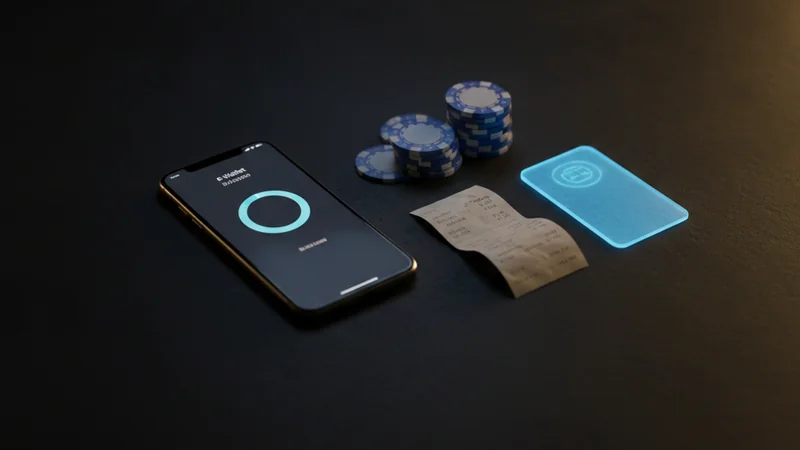
A Touch ‘n Go casino deposit is an ordinary eWallet transfer that happens to be sent to an online casino’s collection account, and almost everything that goes right or wrong with it follows from that one fact. The money moves instantly over the wallet’s own rails or DuitNow; the casino then has to recognise your payment among hundreds of others and credit it, which is where the minutes go; and the wallet operator, TNG Digital, applies its own account limits, fees and terms to the transaction without knowing or caring what it was for, except that its terms say the wallet must not be used for gambling at all. This guide explains how the deposit clears step by step, what the wallet’s current rules permit, how a withdrawal lands back in the wallet, and the specific points at which Touch ‘n Go casino payments stall.
The facts about the wallet come from Touch ‘n Go’s own user terms and conditions, updated on 5 June 2026, and its published announcements; the facts about the casinos come from the payment data we record for the ten brands we review. We have not run live deposits for this guide, so where we describe how a cashier behaves we say so.
Why Touch ‘n Go Became a Casino Rail at All
Touch ‘n Go eWallet is listed by seven of the ten casinos we review, more than any method except plain bank transfer, and the reason is structural rather than a matter of player preference. Malaysia has no licensing regime for online casinos, so no operator can open a Malaysian merchant account as a gambling business. Operators therefore collect deposits through accounts that are not in their own name. An eWallet that the company said had 16 million users when it introduced its Premium tier in August 2021, that accepts transfers from any bank by DuitNow, and whose transfers show up on a bank statement only as a reload to a household brand, is close to ideal for that purpose from the operator’s side.
From the player’s side the appeal is the same discretion plus speed. The reload to the wallet is a known, respectable line on the bank statement, and the transfer from the wallet to the casino appears only inside the app. That is the whole of the privacy benefit, and it is worth being precise about its limits before going further: TNG Digital verifies every account that can transfer money out, records every transaction against that identity, and is regulated by Bank Negara Malaysia under its Policy Document on Electronic Money. Nothing about a Touch ‘n Go payment is anonymous. It is simply quieter on one particular statement.
What the Wallet’s Own Terms Allow
Touch ‘n Go publishes its account structure in clause 1.7 of its user terms, and the June 2026 version is the one that applies today. There are four account types. A Standard account, which is what a Malaysian user holds after completing the in-app identity verification the terms call Account Verification (eKYC), has an account limit of RM20,000, a monthly transaction limit of RM120,000 excluding transport, an annual transaction limit of RM600,000 including transport, and can both send and receive money transfers. International Tourist and UNHCR ID Holder accounts hold RM5,000, with RM5,000 a month and RM60,000 a year. A Lite account, which the terms say applies only to accounts registered before 20 December 2024 and never verified, holds RM200, transacts RM2,000 a month, and cannot transfer money out at all.
Three consequences follow for casino use. First, an unverified wallet cannot deposit at a casino, because it cannot transfer out. Second, the RM20,000 account limit is a ceiling on what can sit in the wallet at any moment, so a withdrawal that would push the balance past it cannot be received; the terms say you may add money “whenever your Available Balance falls below the Account Limit”, and the same logic applies to money arriving. Third, clause 1.8 lets you set your own single-transaction and daily limits below the maximums, and a limit you set months ago and forgot is a common reason a deposit is refused by the app rather than by the casino.
The terms also distinguish between balance you can send and balance you cannot. Clause 1.15 defines a Non-transferable Balance, funded by TNG Reload PINs and any other source TNG Digital nominates, which “may not be used for Money Transfer, transfer to external accounts (bank accounts or other e-wallets)” or investment products. Reload PIN top-ups are capped at RM8,000 a month, and converting that balance into transferable balance costs a 1% fee under clause 1.16. In plain terms: money loaded by Reload PIN cannot be sent to a casino’s account without paying to convert it, and a cashier that shows your transfer as failed may be hitting exactly this rule.
Then there is the clause most casino guides leave out. Clause 2.1(a) requires you to use the wallet “for its intended use only primarily for payment, investment, and to obtain goods and services”, and clause 2.2(a) says you shall not use it “for any purpose which is against public interest, public order or national harmony or for any unlawful purposes including but not limited to vice, gambling or other criminal purposes whatsoever”. Clause 4.2 then entitles TNG Digital to “immediately suspend or terminate your use of the Service” and your access to the account, “with or without any notice to you”, where in its opinion there is “illegality, criminality or misrepresentation” in the conduct of the account, where the wallet has been used outside its intended use, or where you are in breach of the terms or of any law. Clause 1.43 adds that the account and transaction limits themselves exist “to avoid any fraudulent, illegal or unlawful transactions”, citing the Financial Services Act 2013 and the anti-money-laundering legislation. A player who deposits at casinos through Touch ‘n Go is doing something the wallet’s contract prohibits, and the remedy the contract provides is the loss of the wallet. We cannot tell you how often that remedy is used; we can tell you it is written down.
How a Touch ‘n Go Casino Deposit Clears, Step by Step
1. You fund the wallet. The fee-free routes are a DuitNow transfer from your bank, which Touch ‘n Go says accepts reloads from RM1 with no charge and replaced the older FPX reload in July 2023, and a Malaysian debit card, where the convenience fee is waived. A Malaysian credit card costs 1% of the reload, a foreign-issued card up to 2.6%, and the terms separately allow the account to be closed for using the wallet “as a medium to facilitate withdrawal of money from your credit card”, so funding casino play from a credit card through the wallet is a poor idea on two counts.
2. The cashier gives you a destination. At the casinos we review this is one of three things: a DuitNow ID, which may be a mobile number, NRIC or business registration number tied to a bank or wallet account; a Touch ‘n Go account identified by its registered mobile number; or a DuitNow QR code to scan. The details are generated for your deposit or rotated frequently, and the cashier typically asks you to complete the transfer within a short window before the details expire.
3. You send the transfer and read the name. Whether you pay by QR, by transfer to a mobile number or by DuitNow to a bank account, the app shows you the registered name of the account holder before you confirm. That name will not be the casino’s; it will be a payment processor’s nominee or an individual. It should, however, match the name the cashier displayed. If it does not, stop, because an eWallet transfer, like a DuitNow transfer, is final once sent. PayNet’s published rules make DuitNow transfers up to RM5,000 free and instant, with a 50 sen fee above that which many banks waive, and nothing in those rules provides for reversing a payment you made deliberately.
4. You submit the reference. This is the step that decides how fast the deposit appears. Because the casino’s collection account receives many payments that all look alike, the cashier asks for the transaction reference, the exact amount, the time, and usually a screenshot of the wallet’s confirmation screen. Operators that have automated this match the amount and reference and credit within a minute or two; operators that do it by hand credit when a staff member gets to it. The brands we review describe deposits as reflecting “within minutes”, which is consistent with the first model, but a mistyped reference or a rounded amount sends the payment into a manual queue.
5. The casino credits your balance. Only now does the money exist as far as the casino is concerned. Keep the wallet’s confirmation screen and the cashier’s deposit record until the money has come back out again; if a deposit is never credited, those two records are the entire basis of your complaint.
A note on the two agent-run apps in our review set. At Mega888 and 918Kiss there is no cashier in this sense. You transfer to the personal Touch ‘n Go or bank account of the agent who gave you your login, and the agent credits the app manually. The mechanics are the same; the counterparty is one person.
How a Withdrawal Lands in the Wallet
A withdrawal runs the deposit in reverse, with two gates in front of it. The first is the casino’s own process: identity verification before a first payout, which our guide to casino KYC checks describes, any bonus wagering still outstanding, and the operator’s processing window. The second is the closed loop that most cashiers apply, paying out only through the method and to the person that deposited, which means a withdrawal to Touch ‘n Go generally requires that you deposited from a wallet in your own name.
Once approved, the casino sends a DuitNow transfer to your eWallet. Touch ‘n Go gives every verified wallet an account number that it describes as working exactly like a bank account number, which is what the casino pays into, and the credit arrives instantly once sent. Three things can stop it. The wallet may be at or near its RM20,000 ceiling, in which case the transfer fails and the casino has to resend in smaller parts or to a bank account. The monthly transaction limit, generous at RM120,000 on a Standard account but only RM5,000 on a tourist account, may be exhausted. Or the name on the receiving wallet may not match the name on the casino account, and the payment is refused at the casino’s end before it is ever sent.
Among the seven reviewed casinos that list Touch ‘n Go, the payout ranges we record run from around half an hour at the fast end at 96M and Mega888 to three days at the slow end at BK8, me88 and Starbuck88, with Maxim88 and 918Kiss at a day or less. Those are ranges from desk research across all methods, not withdrawals we ran, and e-wallet payouts are reported towards the quick end of each range at every brand that offers them. The comparison of e-wallet casino sites we have checked sets those ranges beside the licensing position of each brand, which this guide does not repeat.
Where Touch ‘n Go Casino Payments Stall
Most failed or delayed Touch ‘n Go casino payments fall into a short list of causes, and knowing which one you are looking at saves a long conversation with live chat.
- Unmatched deposit. The transfer went through but the casino cannot find it, almost always because the reference was wrong, the amount was rounded, or the payment went to details that had already expired. The fix is the wallet’s transaction record, with its reference and timestamp, sent to support.
- Name mismatch. The app showed a recipient name different from the one the cashier gave. If you proceeded, you paid someone other than the casino’s collection account, and there is no claim to make. If you stopped, you lost nothing.
- Wallet full. A withdrawal bounced because it would have taken the balance past RM20,000. Move money to your bank and ask the casino to resend.
- Non-transferable balance. The deposit failed in the app because the balance came from a Reload PIN. Convert it, at the 1% fee, or reload by DuitNow instead.
- Self-set limit. The app refused the transfer because a per-transaction or daily limit you set earlier is lower than the deposit. Raise it in the app’s settings, within the maximums in clause 1.8.
- Account under review. The wallet has restricted or suspended the account. This is the outcome the terms provide for, and the only route is TNG Digital’s customer service and, failing that, the Financial Markets Ombudsman Service that the terms name for complaints.
- Dormancy. A wallet with no transaction or login for 365 consecutive days is suspended under clause 1.52 and blocked after a further 180 days, which catches players who return to a casino after a long break.
None of these is specific to any one casino, and none of them is something the casino can fix on your behalf, which is why the first question in any delay is whether the money ever reached the collection account.
Fees on the Round Trip
The casinos we review do not publish a fee for Touch ‘n Go deposits or withdrawals, and the wallet’s own charges on the casino leg are nil: a transfer or QR payment from a transferable balance costs nothing, and PayNet’s published DuitNow pricing applies only above RM5,000 and is often waived. The costs sit at the edges. Reloading from a Malaysian credit card costs 1%; converting Reload PIN balance costs 1%; a foreign card costs up to 2.6%. Transferring winnings on from the wallet to your bank is a DuitNow transfer and free up to RM5,000. In practice a Touch ‘n Go casino round trip funded by DuitNow from a bank account costs nothing in fees, which is one more reason it is the default rail at the Malaysian-facing brands, and one reason to be suspicious of any cashier that adds a Touch ‘n Go charge of its own.
What This Method Does and Does Not Protect
The honest summary is that Touch ‘n Go buys discretion on a bank statement and speed in both directions, and nothing else. The transfer is as final as a bank transfer. The wallet operator knows who you are and what you sent, and its terms forbid the use and allow the account to be closed for it. If the casino does not credit a deposit or does not release a withdrawal, the wallet has no role in the dispute; the route runs through the casino’s complaints process and whatever dispute body its licence provides, which our guide on what to do when a casino won’t pay out sets out step by step, including which of the ten reviewed casinos has such a body and which has none.
How Touch ‘n Go compares with the other rails, from FPX and DuitNow to cards, international wallets and crypto, on speed, limits, fees and what each lets you take back, is the subject of our wider guide to casino payment methods. The short version is that every local instant rail shares Touch ‘n Go’s finality, that only cards offer even a narrow dispute route, and that crypto is faster still with no protection at all.
Finally, the legal context. Everything above describes how the payment works; none of it changes the position of a player in Malaysia, where the operators themselves are unlicensed and where the law, and for Muslim players the Syariah enactments, are set out in our online casino Malaysia guide. The wallet’s prohibition on gambling use is a contractual layer on top of that position, not a substitute for understanding it, and this guide is not legal advice.
The Bottom Line
A Touch ‘n Go casino deposit clears in two stages: an instant transfer that the wallet completes without question, and a matching step that the casino completes only when your reference lines up with the payment in its collection account. Withdrawals come back the same way, subject to the casino’s checks and the wallet’s RM20,000 ceiling. The wallet’s June 2026 terms allow a verified Standard account to move RM120,000 a month, forbid gambling use outright, and permit suspension for breach, so the method is fast, free and discreet, and carries a risk to the wallet itself that no cashier will mention. Fund it by DuitNow, read the recipient name before you confirm, keep the confirmation screen, and never deposit more than you are prepared to see held while a reference is chased.
Sources and further reading
Regulators, standards bodies and primary references behind this guide.
- → TNG Digital — Touch 'n Go eWallet user terms and conditions (updated 5 June 2026)
- → Touch 'n Go — eWallet account tiers and user numbers (announcement of 25 August 2021)
- → Touch 'n Go — eWallet online banking reload moves from FPX to DuitNow Transfer
- → PayNet — DuitNow Transfer: limits, fees and participating banks
- → Bank Negara Malaysia — Policy Document on Electronic Money
Frequently Asked Questions
Can I use Touch 'n Go eWallet to deposit at an online casino?
Mechanically, yes: seven of the ten casinos we review list Touch 'n Go, and a deposit is an ordinary wallet transfer or QR payment to an account the casino's cashier names. Two things sit against that. Touch 'n Go's own user terms, updated 5 June 2026, say the wallet shall not be used for unlawful purposes including gambling and allow the account to be suspended or terminated for breach, and Malaysia has no licence under which an online casino can operate. Our country guide covers the legal position; this guide covers the mechanics.
How long does a Touch 'n Go casino deposit take to clear?
The transfer itself is instant, because it runs over DuitNow or within the wallet. The wait is the casino's matching step: your payment arrives in a collection account alongside many others, and it is credited to your casino balance only once the reference or screenshot you supplied has been matched, which the operators we review describe as a few minutes but which can stretch when the reference is wrong or the account details have changed since you copied them.
What is the maximum I can deposit or withdraw with Touch 'n Go?
Under the June 2026 terms a verified Standard account can hold RM20,000 and transact RM120,000 a month excluding transport, while older unverified Lite accounts hold RM200, transact RM2,000 a month and cannot transfer money out at all. The wallet ceiling is the figure that bites on withdrawals: a payout that would take the balance past RM20,000 cannot land. The casino's own cashier limits and your self-set per-transfer and daily limits apply on top.
Can Touch 'n Go freeze my eWallet because of casino transactions?
The terms give TNG Digital that right. Clause 4.2 allows it to suspend or terminate the service, with or without notice, where it suspects illegality, abuse, use outside the wallet's intended purpose or a breach of the terms, and clause 2.2 lists gambling among the prohibited uses. We have no figures for how often that happens, and the wallet also states that its account and transaction limits exist to prevent unlawful transactions under the Financial Services Act 2013 and the anti-money-laundering law, so repeated casino flows are exactly the pattern those controls look for.
Can a casino pay my winnings back into Touch 'n Go?
Yes, where the casino offers Touch 'n Go as a withdrawal method rather than only a deposit method, which is worth confirming in the cashier before you deposit. The payout arrives as a DuitNow transfer to your eWallet's account number, which Touch 'n Go describes as working like a bank account number. It lands only if the wallet has room under its RM20,000 ceiling and only if the account is in your own name, since most cashiers pay back to the same person and method that deposited.
Is Touch 'n Go safer than a bank transfer for casino payments?
It is more discreet, not safer. Your bank statement shows a reload to Touch 'n Go rather than a transfer to an unfamiliar name, which is the main reason players choose it, but the transfer from the wallet to the casino is just as final as a bank transfer, the wallet operator verifies your identity and records every transaction, and its terms prohibit the use. If something goes wrong with the casino, your position is the same as with any other instant local payment: the dispute runs through the casino and its licence, not through Touch 'n Go.