How to Play Baccarat: Rules, Odds and the Banker Bet Explained
Published · Updated · 8 min read · By the PlayersReports Editorial Team
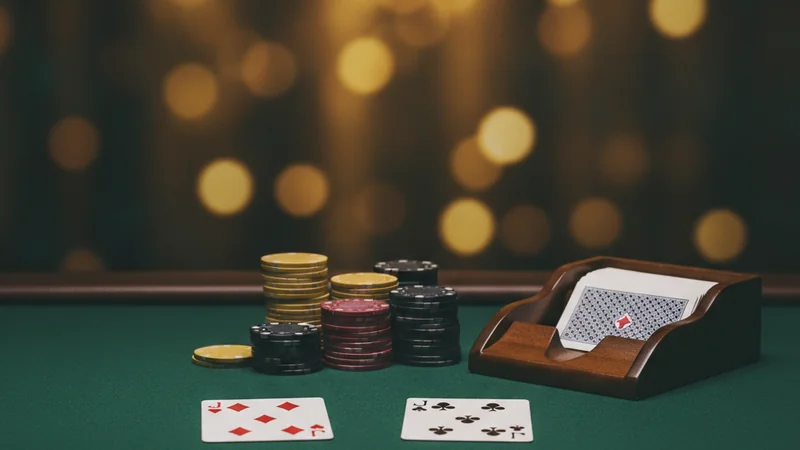
To play baccarat, you bet on one of three outcomes before the cards are dealt: the Player hand wins, the Banker hand wins, or the two hands tie. The dealer gives two cards to each hand, adds a third card to one or both hands according to fixed rules, and the hand whose total is closest to 9 wins. You never decide whether to draw, so learning how to play baccarat is mostly a matter of understanding the bets, the payouts and the price each bet carries.
This guide takes the rules from New Jersey’s published punto banco regulations, the Division of Gaming Enforcement’s N.J.A.C. 13:69F, and the house edges from the Wizard of Odds analysis for an eight-deck shoe, the standard in casinos and most online live dealer games. Where the two sources describe the same thing, such as the third-card table, we checked one against the other cell by cell.
The Three Bets You Can Make
Every baccarat round starts with the same choice:
- Player pays 1 to 1. A RM100 winning bet returns RM200, your stake plus RM100.
- Banker pays 1 to 1 minus a commission, normally 5% of the winnings. A RM100 winning bet returns RM195. New Jersey allows casinos to charge either 4% or 5%; 5% is the usual rate in Asian casinos and online.
- Tie pays at least 8 to 1. A RM100 winning bet returns RM900.
“Player” and “Banker” are just names for the two hands. You aren’t playing against anyone at the table, and betting on Banker doesn’t make you the bank. If the hands tie, Player and Banker bets are returned, which is called a push, and only Tie bets are paid.
Card Values and the Totals
Baccarat uses simple card values:
- Ace: 1.
- Two to nine: face value.
- Ten, jack, queen and king: 0.
A hand’s total is the last digit of the card values added together. 9 + 7 = 16, so the hand is worth 6. 5 + 5 = 10, worth 0. A king and a 3 is worth 3. No total can be higher than 9, and there is no such thing as going bust.
A two-card total of 8 or 9 is called a natural. If either hand has a natural, both hands stand and the round is settled immediately.
The Third-Card Rules
This is the only part of the game that looks complicated, and you never have to apply it yourself. The dealer follows the rules, but knowing them helps you follow the game.
The Player hand
If neither hand has a natural, the Player hand acts first:
- 0 to 5: the Player hand draws a third card.
- 6 or 7: the Player hand stands.
The Banker hand
If the Player hand stood on 6 or 7, the Banker hand draws on 0 to 5 and stands on 6 or 7.
If the Player hand drew a third card, the Banker hand decides using both its own total and the value of the Player’s third card:
| Banker total | Draws when Player’s third card is | Stands when Player’s third card is |
|---|---|---|
| 0, 1, 2 | any card | — |
| 3 | 0, 1, 2, 3, 4, 5, 6, 7, 9 | 8 |
| 4 | 2, 3, 4, 5, 6, 7 | 0, 1, 8, 9 |
| 5 | 4, 5, 6, 7 | 0, 1, 2, 3, 8, 9 |
| 6 | 6, 7 | 0, 1, 2, 3, 4, 5, 8, 9 |
| 7 | — | any card |
A “0” third card means a ten or a picture card. New Jersey’s regulation gives the same table in grid form, and the example in the rules matches it: a Banker total of 5 against a Player third card of 4 means the Banker draws.
Worked example
The Player hand is 3 and 2, a total of 5, so it draws a third card: a 7, making 12, worth 2. The Banker hand is a jack and a 6, a total of 6. Look at the Banker 6 row: against a Player third card of 7, the Banker draws. It gets a 4, making 10, worth 0. The Player’s 2 beats the Banker’s 0, so Player bets win at 1 to 1.
The Real Odds: House Edge for Each Bet
The house edge is the share of each bet the casino expects to keep over the long run. For an eight-deck shoe, Wizard of Odds gives these figures:
| Bet | Pays | Probability of winning | House edge |
|---|---|---|---|
| Banker | 1 to 1, minus 5% | 45.86% | 1.06% |
| Player | 1 to 1 | 44.62% | 1.24% |
| Tie | 8 to 1 | 9.52% | 14.36% |
| Player or Banker Pair | 11 to 1 | 7.47% | 10.36% |
On a Player or Banker bet, a tie (9.52% of rounds) is a push, which is why the Player and Banker probabilities don’t add up to 100%.
Two things stand out. First, Banker and Player are among the cheapest bets in any casino. Our guide to the lowest house edge casino games shows how they compare with blackjack, craps and roulette. Second, the Tie bet is very expensive. Its 8 to 1 payout looks generous, but a tie comes up less than one round in ten, and the payout doesn’t reflect that.
Why the commission exists
The Banker hand wins more often than the Player hand because it acts second, after seeing whether the Player drew and what it drew. Using the eight-deck figures above, a Banker bet paid at even money with no commission would give the player an edge of about 1.24% (45.86% wins minus 44.62% losses). The 5% commission takes enough off each win to turn that into a 1.06% edge for the house. That’s why Banker remains the cheapest bet even after commission. Without the commission, the casino would be losing money on it.
Does the number of decks matter?
Very little on the main bets. Wizard of Odds’ six-deck figures are the same as eight decks to two decimal places for Banker (1.06%) and Player (1.24%). The Tie edge rises slightly to 14.44%. Even a single-deck game, which you’ll rarely find, only moves Banker to 1.01% and Player to 1.29%, while the Tie gets worse at 15.75%. Deck count isn’t worth choosing a table over. The commission rule and the Tie payout matter far more.
No-Commission Baccarat
Many casinos and online tables in Asia offer a no-commission version. The most common rule is that Banker bets pay even money with no commission, except that a winning Banker total of six pays only 1 to 2: half your stake. New Jersey’s regulation explicitly allows this variant as an alternative to charging commission.
It sounds like a better deal, but it isn’t. A winning Banker six happens in about 5.39% of rounds on eight decks. Working through Wizard of Odds’ combination counts, paying half on those wins gives the Banker bet a house edge of about 1.46%, compared with 1.06% in the commission game. The Player bet is unaffected at 1.24%. If you mainly bet Banker, the traditional table with commission is cheaper. If you mainly bet Player, it makes no difference which version you choose.
Other no-commission variants handle it differently. In EZ Baccarat, for example, a Banker win with a three-card 7 is a push rather than a win. Check the table’s rule card, because the specific exception decides the house edge.
Side Bets
Most tables offer extra bets alongside the main three. They pay more but cost more. The eight-deck house edges from Wizard of Odds:
- Player Pair / Banker Pair (the first two cards are the same rank, paying 11 to 1): 10.36%.
- Dragon Bonus (pays by how much your chosen hand wins by, with naturals paying 1 to 1): 2.65% on the Player side and 9.37% on the Banker side, using the common pay table. New Jersey lists the same structure as an “optional bonus wager”, topping out at 30 to 1 for a nine-point win.
- Dragon 7 in EZ Baccarat (Banker wins with a three-card 7, paying 40 to 1): 7.61%.
- Super 6 on no-commission tables (a winning Banker six): the edge depends on whether the table pays 12 to 1 or more, so read the pay table before betting.
As a rule, every side bet above costs more than the Banker and Player bets. Player Dragon Bonus is the least expensive of them, and even that is more than twice the cost of a Banker bet.
Live and Online Baccarat
Online, you’ll mostly meet baccarat at live dealer tables streamed from a studio, plus some computer-generated versions. The rules and payouts above apply unless the table states otherwise. The main formats are:
- Standard live baccarat, dealt from an eight-deck shoe with a real dealer.
- Speed baccarat, where cards are dealt face up quickly and rounds take a fraction of the time. The house edge per bet is unchanged, but more rounds per hour means more money staked, and so more expected loss, in the same session.
- Squeeze baccarat, where the dealer peels the cards slowly for suspense. The odds are the same; the game is just slower and more theatrical.
- No-commission tables, often labelled “No Commission” or “Super 6”, with the Banker six rule described above.
Speed matters more than most players realise. A 1% house edge costs you about RM1 per RM100 staked. Play 200 hands an hour at RM100 a hand and the expected cost is around RM200 an hour on Banker, whatever the outcome of any single session. Set a budget in time and money before you sit down, and use the support options on our responsible gambling page if baccarat stops feeling like entertainment.
Roadmaps, Bead Plates and Patterns
Baccarat tables, especially in Asia and online, show scoreboards known as roadmaps: the bead plate, big road, big eye boy, small road and cockroach pig. They record which hand won each round in the current shoe, and many players use them to spot “streaks” or “chops”.
They can’t predict anything. Each round is dealt from what remains of a shuffled eight-deck shoe of 416 cards, and the cards already dealt barely change the odds of what comes next. Wizard of Odds measured the effect of removing a single card from an eight-deck shoe: the Banker house edge moves only between about 1.046% (a 4 removed) and 1.069% (a 6 removed). That’s far too small to make any bet profitable, which is why card counting doesn’t work on the main baccarat bets.
Streaks are normal in random sequences. If Banker has won five times in a row, the chance of it winning the next hand is still about 45.86%, the same as on the first hand of the shoe. Converting a payout into its implied chance, as our implied probability calculator does for betting odds, is a better habit than reading patterns into a scoreboard.
A Short Checklist Before You Play
- Learn the card values and the idea of a natural. The dealer handles everything else.
- Bet Banker or Player. Both have house edges close to 1%.
- Check whether the table charges commission or uses a no-commission rule, and what the exception is.
- Skip the Tie bet unless you accept paying a 14.36% house edge for the excitement.
- Treat side bets as entertainment with a higher price.
- Ignore roadmap patterns when choosing your bet.
- Decide your stake, number of hands and stop point before you start.
Baccarat is one of the simplest casino games to play and one of the cheapest to play well, as long as you stick to the main bets. It can’t be beaten in the long run, and no staking plan or pattern changes that.
Sources and further reading
Regulators, standards bodies and primary references behind this guide.
- → New Jersey Division of Gaming Enforcement — N.J.A.C. 13:69F Subchapter 3, Baccarat–Punto Banco (card values, drawing tables, payout odds and vigorish)
- → Wizard of Odds — Baccarat rules and eight-deck house edge analysis
- → Wizard of Odds — Baccarat side bets (Dragon Bonus, Super 6, Dragon 7)
- → Wizard of Odds — Baccarat card counting: effect of removing a card
Frequently Asked Questions
How do you play baccarat for beginners?
Place a bet on Player, Banker or Tie before the cards are dealt. Two cards go to each hand, and a third card may be added by fixed rules that nobody chooses. The hand closest to 9 wins. Card values are simple: aces count 1, two to nine count their face value, and tens and picture cards count 0. Only the last digit of a total counts, so 7 + 8 = 15 becomes 5.
Which bet is best in baccarat?
On standard eight-deck baccarat, Banker has the lowest house edge at 1.06%, even after the 5% commission. Player is close behind at 1.24%. Tie pays 8 to 1 but carries a 14.36% house edge, more than ten times worse. Banker is the cheapest bet to make over time, but no bet in baccarat has a long-run edge for the player.
Why does the Banker bet pay a 5% commission?
Because the Banker hand wins slightly more often, thanks to the drawing rules that let it act after seeing the Player's third card. On eight decks Banker wins 45.86% of hands and Player 44.62%. Paid at even money, Banker would give the player an edge of about 1.2%. The 5% commission turns that into a 1.06% house edge.
What is no-commission baccarat and is it better?
In no-commission baccarat the Banker bet pays even money with no commission, except that a winning Banker total of six pays only half. On eight decks that raises the Banker house edge from 1.06% to about 1.46%, so the regular commission game is cheaper for Banker bettors. The Player bet's 1.24% edge is the same in both versions.
Can you predict baccarat results from the roadmap or bead plate?
No. Roadmaps and bead plates only record past results. Each hand is dealt from a shuffled multi-deck shoe, and removing a single card shifts the Banker house edge by only a few hundredths of a percentage point. Streaks and patterns appear in any random sequence, but they don't tell you what the next hand will be.